
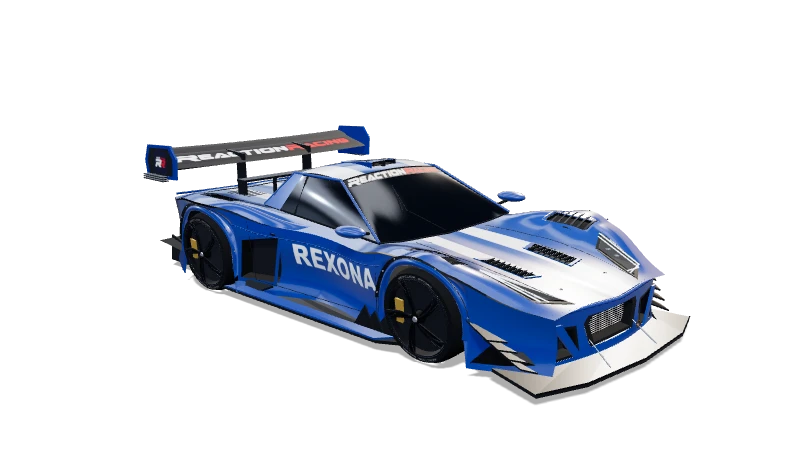
Explore car liveries, archive views, availability and ownership-based rarity. Separate your car’s visual identity from upgrades and racing progression.
A car you enjoy looking at usually has a clear visual idea. It might be the pale body of Apex White, the restrained darkness of Graphite Works or the strong blue of Cobalt Squadron. Begin with that idea, then inspect it on the car. Collecting the most complicated paintwork is not the same thing as building a look that reads well.
Separate the chassis, the paint and the performance
ReactionRacing's four chassis are Vector GT, Kestrel TR, Bastion SR and Axiom XR. The chassis gives the car its shape; a livery supplies the colour and graphic identity. Performance development is a different system. Do not read a bright accent, sponsor mark or rarity score as a handling upgrade.
The website's showcase presents fully upgraded Level 15 cars, so it shows the developed shape rather than promising that a new account starts with that specification. The livery archive notes that its preview is at maximum Level 15. Use that information when comparing a website render with the car currently in your garage.
Choose one feature that leads the design
Pick a dominant body colour or a graphic you want to recognise at a glance. Reaction Factory makes the game's own identity the starting point. Cobalt Squadron offers a stronger colour direction. Graphite Works, Apex White and Champion Gold take different approaches to contrast. The useful question is which one you can still recognise when the car is small, not which has the longest description.
Partner liveries add an additional element: a recognisable brand identity. Look at how that mark sits against the body colour and around the car's panels. A logo that reads clearly in the side view may be much less prominent from the front. That is why choosing from a single attractive three-quarter image can give an incomplete impression.
Use all five archive views
Open a livery in the archive and inspect the three-quarter front, left, right, back and front views. Start with the overall silhouette, then check where the main colour breaks and marks land. The two sides are worth inspecting separately: perspective and panel layout can change how a design reads.
The rotating homepage showcase answers another question: how does a livery look as the car turns? It cycles through the four chassis at full development. Pause the rotation when a combination catches your eye, then follow the livery link for its availability and acquisition details. An attractive preview is a way to inspect the item, not a guarantee that it is currently obtainable.
Availability is a separate fact from appearance
A published livery can have an availability window and an acquisition route. Read those fields before deciding it belongs in your next build. The catalogue can distinguish items available for Race Credits or Gears, free items and items connected to achievements or rank requirements. The exact record tells you which route applies.
An archived design remains useful as a record of past paintwork, but it may no longer be available in the shops. Its historical page is not a sales offer. The website's merchandise cart is also separate from the in-game customization catalogue: adding clothing to that cart does not equip a car livery.
What the rarity score actually means
The archive reports unique owners and an ownership-based rarity score. That compares ownership with the game's player-account population. It is not a claim that production is capped, that an item will never return or that owning it improves race performance.
Check both the owner count and the explanation below the score. A low count can reflect a recently published item, limited eligibility or simply a design fewer players chose. The score alone cannot tell you which explanation applies. Choose a look because you like it and understand how to obtain it, not because a number seems to promise future value.
Build a short list, then return to the garage
Compare two or three designs using the same camera view. Note the dominant colour, how the side marks read and whether you prefer the front and rear as much as the hero angle. Then verify the current item and requirements inside the app before spending your in-game resources.
Newly published liveries and partners appear automatically in the site's live directory and detail pages. The archive therefore remains worth revisiting without assuming an old screenshot is the current catalogue. For the distinction between visual customization and progression, read Race Credits and Gears explained; for the actual driving challenges, return to how racing works.