
More than a
quick reaction.
Practise reactions, focus, decisions, precision, timing and awareness through racing. The Reaction Index describes your in-game performance across these six skills — beyond a single fast tap.
A racing game built around how you perform under pressure
Performance in motorsport is not simply seeing a light quickly. It is detecting the stimulus, identifying what it means, selecting the right response, and executing a coordinated movement — under time pressure, repeatedly, without losing accuracy. Our gameplay is built around exactly that chain.
Game
Racing, championships, progression and cars you want to look at.
Performance
Repeated practice in noticing, choosing and responding through the race controls.
Measurement
An in-game profile across six skills, with scores shown once calibrated.
Research
A proposed research framework for testing benefits beyond the game.
Illustrative profile. The Reaction Index is an in-game performance measure, not a medical or clinical assessment.
Put your mental skills into practice
Start with reaction-time practice, work on focus and consistency, or explore decision-making under pressure. These are in-game practice guides; our evidence guide explains the limits of broader claims.
Six skills. One driver.
The everyday skill names explain what you practise. The fuller names are the ones used in your Reaction Index. Each is linked to actions in normal turns, attack attempts and defence attempts.
Reaction Speed
Respond quickly to the cue.
In the game: wait through the lights, then respond as soon as the changing CLICK ME target becomes active.
Index focus: clean response time across repeated turns, with false starts and misses treated separately.
Attention Consistency
Stay attentive through every turn.
In the game: unpredictable turns repeat across qualifying, races and complete events, so focus has to hold rather than peak once.
Index focus: variability, lapses and performance drop-off as a session continues.
Decision Speed
Choose your move under time pressure.
In the game: read the attack or defend layout and choose the swipe direction or path before moving.
Index focus: how quickly the correct battle response is selected under time pressure.
Response Accuracy
Hit the target. Control the swipe.
In the game: hit the target cleanly, stay out of danger zones and avoid contact or wrong moves in battles.
Index focus: misses, incorrect actions, contact and other execution errors relative to speed.
Timing Control
Wait for the cue. Then act.
In the game: normal turns punish early actions, while battles reward completing the move inside the window without rushing into danger.
Index focus: false starts, premature actions and how precisely responses are timed under pressure.
Visual Awareness
Spot the target. Read the situation.
In the game: locate targets as their position and size change, then spot the relevant rival, opening or safe zone in a battle.
Index focus: detection and response quality across changing visual locations, sizes and race situations.
These are related aspects of gameplay, not six isolated tests of general mental ability. Scores summarise in-game signals and need enough suitable attempts to calibrate; a score that is not yet available is not a zero. How to read your profile.
Practice in the game.
Evidence beyond it.
Our research plan asks whether progress in ReactionRacing carries over to independent tasks that players have not practised. This is a proposed evaluation, not a completed study or a claim of proven benefits outside the game.
Choice reaction
From racing battles to a standard choice-reaction task: same chain, different context.
Vigilance & tracking
Attention Consistency and multiple-object processing on tasks with no racing in them at all.
Hazard response & multitasking
Driving hazard response and operational multitasking. The most valuable result, and the hardest to earn.
The proposed study design
Baseline
Measured before any structured play.
After six weeks
The training window itself.
Four to eight weeks later
No structured training in between — this is what tells us whether gains hold.
The proposed framework uses a randomised comparison, consistent hardware and independent tasks covering choice reactions, sustained attention, visual tracking and hazard perception. The protocol would need to be finalised before a study begins.
The plan calls for reporting favourable, neutral and unfavourable results. Read the research framework.
ReactionRacing makes no clinical or guaranteed cognitive-improvement claims. The Reaction Index is an in-game performance measure and is not a diagnosis, therapy or medical device.
Before the race.
Just react.
A short routine designed for real-world and sim racers before their session: rapid visual targets, quick attack-and-defend swipes and brief resets. The aim is to engage attention and responses — not to evaluate performance.
5 × 8 tap targets. CLICK ME appears in a new position each time. Tap, release and move straight to the next target.
1 × 25 random battles. Read the attack or defend screen, swipe and continue. No predictable alternating pattern.
Brief resets. No scores. Pause between bursts. No times, comparisons or performance judgments; finish and return attention to race preparation.
Warm-up design preview. Use only while stationary, before driving. This routine is not a test of fitness to race.
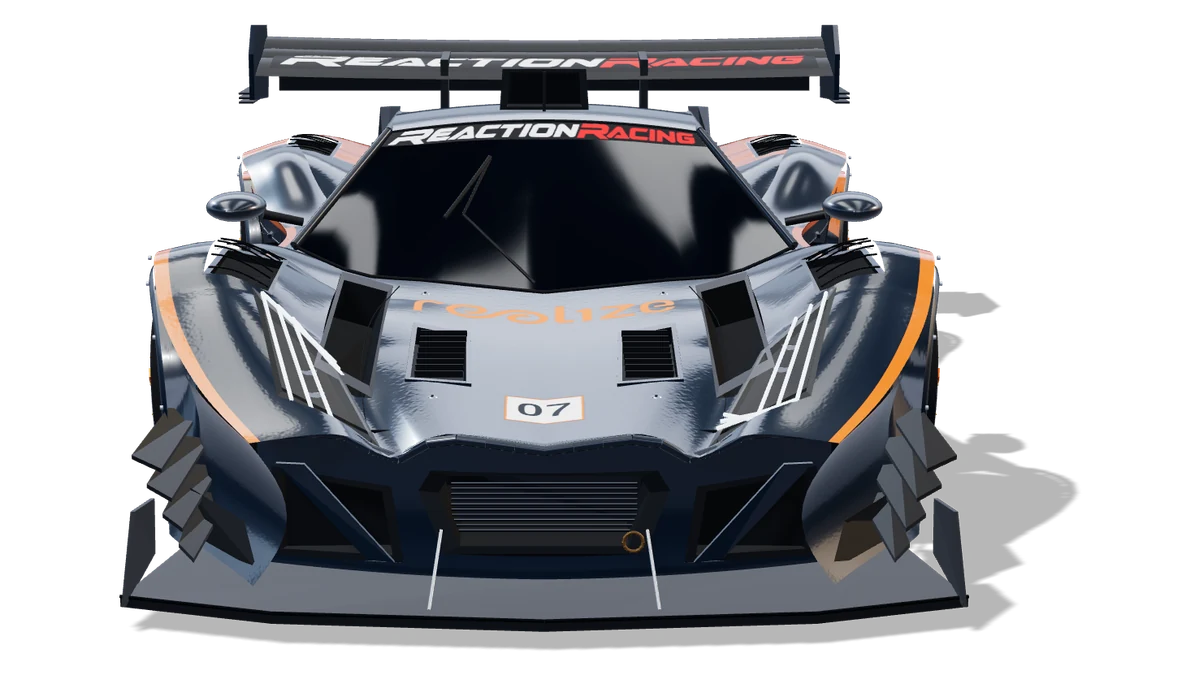
Axiom XR · Real1ze
Ready. Set. React.
Free to play. Start your first race and build your way up the grid.
Optional in-game purchases. Check store availability for your device.