
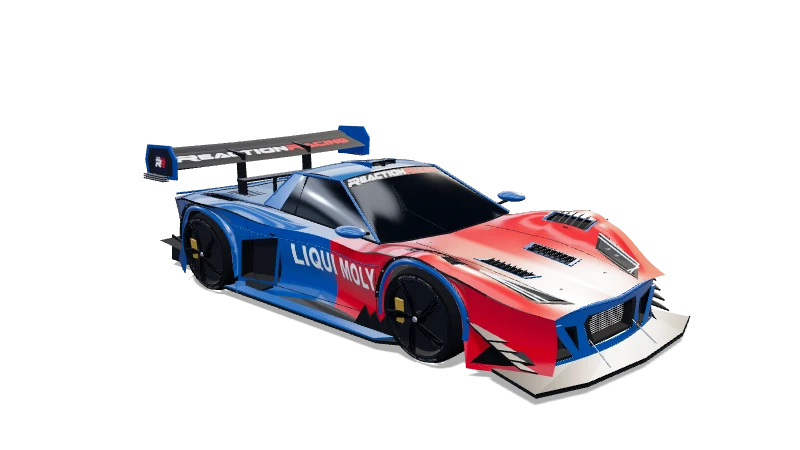
Improve your approach to racing decisions: read the battle, choose the right slide and balance speed with accuracy in ReactionRacing attack and defence.
A fast movement is not always a good decision. In ReactionRacing, a normal turn can put you close enough to fight for position, but the battle that follows asks a new question: can you read the situation and execute the right slide before the opportunity disappears?
Decision-making under pressure is best understood as a sequence. First notice what is happening, then choose a response, then carry it out. If you skip the middle step, fast fingers can deliver the wrong action very efficiently.
Normal turns and battles reward different things
A normal turn asks you to find and hit the target after the light sequence. Attack and defence use slide-based challenges with their own safe areas, hazards and timing. A strong normal-turn result can create the opportunity, but it does not complete the battle for you.
Learn the two battle types separately in the Academy. Do not assume the safe movement from an attack is automatically correct for a defence. The visual gameplay guide shows how their demands differ; the active in-game instructions and result feedback are the authority for the turn you are playing.
Use “read, choose, execute”
- Read: identify whether you are attacking or defending, where the safe area is, and which boundaries or rivals you must avoid.
- Choose: select the intended movement before committing to it. A changing layout means you should not replay the previous slide from memory.
- Execute: move with enough control to stay safe and enough speed to finish within the window.
These are useful cues, not three separate pauses you need to insert into every battle. With familiarity the sequence may feel continuous. The purpose is to make sure speed does not hide a missing observation or a wrong choice.
Diagnose the failure before changing the strategy
After an unsuccessful attempt, ask which link failed. If you misread the safe area, moving faster next time is unlikely to solve the problem. If you chose correctly but crossed a danger boundary, practise control. If the route was clean but you finished too late, then execution speed is the more relevant target.
A simple three-column note works: what I saw, what I intended, and what happened. You do not need to keep a permanent spreadsheet. One clear description of a recurring mistake can be enough to make the next practice block purposeful.
Why a clean attempt can be worth more than a spectacular one
Consider an illustrative practice comparison. One player finishes a single slide very quickly but makes contact on several others. Another completes the block cleanly at a slightly slower pace. The best isolated time does not tell you which approach is more dependable across a race.
That does not mean “always go slowly.” The timing window still matters. The useful target is the fastest movement you can execute accurately for the actual layout. Practise the balance rather than treating raw speed and complete caution as the only choices.
Keep strategy separate from execution
Car development, Boosters and Turbos affect the racing context, while the battle challenge asks you to perform the action. An upgrade does not read a danger area for you. Equally, a well-executed slide does not make every car configuration equivalent.
Review both layers without confusing them. The RC and Gears guide explains progression, and the wheel-to-wheel battle article explains how those moments fit into the race loop.
Use the lesson at the right level
Learning to make better decisions in ReactionRacing is a meaningful game goal. It is not, by itself, evidence that you now make better road-driving, professional or emergency decisions. Those settings have different information and consequences and require independent evaluation.
For the next session, choose one battle type and one recurring error. Read its feedback, practise a controlled response and then bring it back into a race. The focus and consistency routine can help you reset between attempts instead of carrying the last mistake into the next one.