
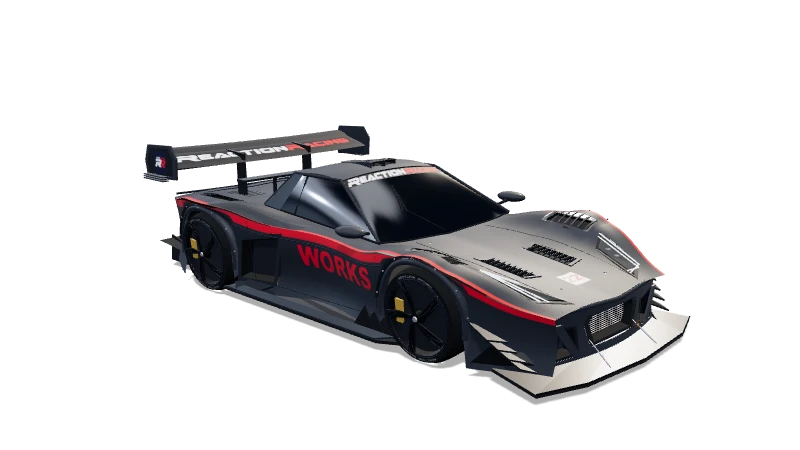
A practical racing focus routine: choose one cue, review lapses and errors, reset after mistakes and compare consistency across similar practice sessions.
A race is rarely decided by your single best response. Repeated clean turns, fewer lapses and a controlled recovery after an error can matter just as much. That is why focus and consistency are useful goals in a reaction racing game: they describe how you perform across a session, not only at its most exciting moment.
Here is a practical way to examine your attention while playing ReactionRacing. It is an in-game review routine, not a medical attention test or a claim that racing treats an attention condition.
Give attention a specific job
“Concentrate harder” is difficult to act on. A more useful instruction names the next thing you need to notice. On a normal turn, that might be waiting for the cue and finding the target’s green centre. In a battle, it might be reading the safe area before beginning the slide.
Choose one cue for a short practice block. If you try to monitor the lights, your personal best, the championship table and every possible mistake at once, it becomes harder to identify why a turn went wrong. Start with the action you can control right now.
Separate a lapse from a difficult attempt
A slow response does not automatically mean you lost focus. The target may have been harder to reach, or a battle may have required a more careful movement. Conversely, a fast response can still be an error if you acted before reading the situation.
After a block, classify what happened in ordinary language: “I looked away,” “I guessed the cue,” “I saw the target but missed the centre,” or “I read the battle correctly but moved too slowly.” This is more useful than attaching the same label to every disappointing result.
Try a three-part consistency check
- Start with a clean baseline. Play a short block on your usual device. Note how many attempts were clean and which errors appeared. Keep the mode the same for the comparison.
- Use one cue in the next block. For example: “read the centre before touching.” Do not also change your grip and chase a faster personal best.
- Compare the pattern. Look at typical clean performance, the slowest attempts and the number of errors. Decide whether the cue helped you execute more reliably.
This is a suggested structure, not an official score calculation. If the blocks have different difficulties, note that difference. A comparison is useful only when it preserves enough context to explain the result.
Use a reset after a mistake
A spin or failed battle can carry into the next attempt if your attention stays on the previous result. Before the next cue, release unnecessary tension in your grip, look back at the active play area and choose the same simple instruction again. The aim is not to pretend the mistake never happened; it is to stop replaying it while another turn begins.
Save the detailed review for the result screen. During the next challenge, the job is to read and execute the current action. If you keep rushing because you want to recover a lost position immediately, a brief break may be more useful than another hurried attempt.
What the Reaction Index adds
Attention Consistency is one of the six domains described on the Reaction Index page. It concerns patterns such as variability and lapses over repeated play. Response Accuracy and Timing Control describe related but different parts of performance. A single score should not replace reading the events that produced it.
Do not compare a relaxed practice session with a demanding event as if the conditions were identical. Use the same task and device where possible, and keep your own short notes about interruptions or changes. A trend is more meaningful when you know its context.
Make the next session easy to review
Finish with one sentence: “Next time I will wait for the target instead of guessing,” for example. That gives you a specific experiment for the next session. Our reaction-time practice guide covers clean-time and error tracking, while the battle decision guide applies the same approach to attack and defence.