
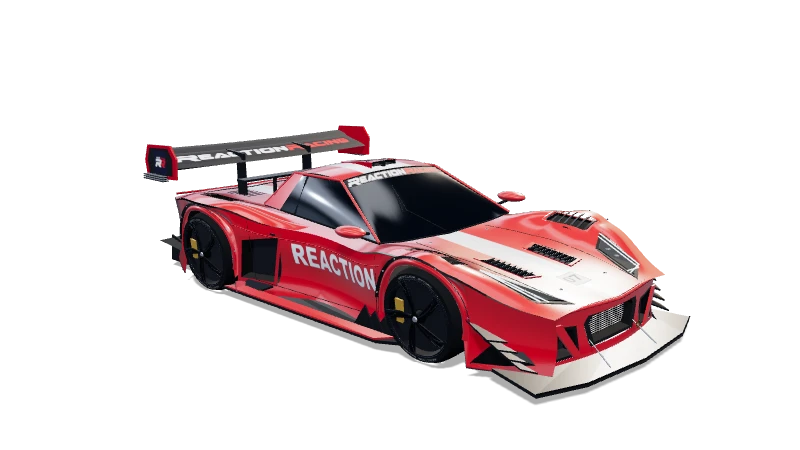
Practise reaction time with short, repeatable blocks. Track clean responses, errors and consistency instead of relying on one lucky personal best.
If you want to improve reaction time in a game, repeatedly chasing your fastest tap is an incomplete plan. A quick response that misses the target is not a clean racing result. Useful reaction-time practice gives you a repeatable task, makes mistakes visible and helps you decide what to change next.
The routine below is a practical way to use ReactionRacing’s Academy and normal turns. It is a suggested practice structure, not a scientifically validated training dose or a guarantee that your reactions will improve outside the game.
First, define the response you are practising
A simple colour-change test asks you to respond to a known cue in a known place. ReactionRacing adds a visual search and a movement: after the light sequence, the target appears at a changing position and size. You must find the green centre and hit it accurately. A slower number can therefore reflect the task’s extra demands, not a sudden loss of ability.
Keep comparisons within the same mode and similar conditions. Normal turns, attack slides and defence slides are different tasks; do not combine their numbers into your own “average reaction time.” The gameplay walkthrough explains what each result represents.
Use a short block with a clear purpose
- Settle your setup. Use the same device, orientation and comfortable grip. Clear avoidable interruptions so that an incoming notification does not become the real challenge.
- Take a few familiarisation attempts. Locate the feedback and remind yourself what a clean hit looks like. Keep these separate from the attempts you intend to compare.
- Record one small block. Five attempts are easy to inspect. Note the clean times and separately count false starts, spins, misses or crashes.
- Choose one adjustment. If misses dominate, aim deliberately at the centre. If early actions dominate, wait for the actual target. Do not change your grip, device and strategy together.
- Repeat once, then review. Compare the whole block rather than taking unlimited attempts until a lucky result appears.
Pair a typical time with an error count
Your personal best answers “what was possible once?” It does not tell you how reliably you can reproduce it. A median clean time, the middle value after sorting your clean attempts, is a useful companion. Always keep the number of excluded errors beside it so that an apparently faster block cannot hide more mistakes.
For example, imagine one block with four clean attempts and one miss, and another with five clean attempts at a slightly slower typical time. The second is not automatically worse. In a race, avoiding the miss may be more valuable than shaving a little time from the clean responses. This is an illustrative comparison, not a scoring rule or a report of player results.
Stop anticipating the light sequence
A predictable rhythm can tempt you to start moving before you have read the target. That may produce an impressive-looking isolated attempt and a series of costly errors. In ReactionRacing, target placement and size change. Treat lights out as the point to read the next cue, not permission to hit a memorised spot.
A helpful instruction to yourself is “find, then hit.” If that feels slower at first, inspect the accuracy as well. You are practising the actual response, not learning how to exploit a practice rhythm.
Know when to end the block
More attempts are not automatically more useful. If you stop reading the feedback, become frustrated, or keep repeating the same error without an adjustment, pause. Come back with a specific question rather than adding dozens of unexamined taps to the session.
Across several sessions, compare similar blocks on the same device. The Reaction Index offers a broader in-game profile; your own notes can explain the choices behind a session. For interpreting millisecond numbers across different tests, read what a reaction-time score actually tells you.