
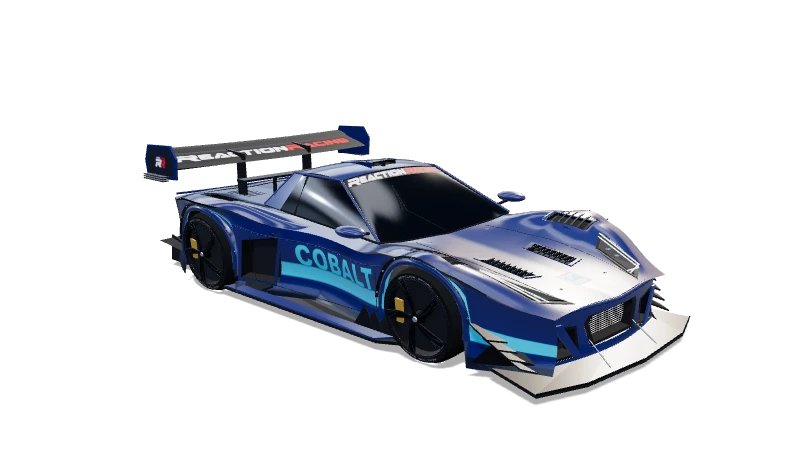
What is a good reaction time in ReactionRacing? Compare normal turns, defence and attack using clean human actions from the latest ten finished races.
For a clean normal turn in ReactionRacing, around 389 ms was the faster-quarter marker in our latest-ten-race sample. Defence and attack were different tasks: their corresponding markers were 467 ms and 471 ms. Those are useful in-game reference points, not universal standards for human reaction speed.
The important part is the phrase “for this task.” A score from a simple colour-change test, a randomly positioned racing target and a controlled battle slide does not measure exactly the same response. Before deciding whether a time is good, identify the cue, the movement and the conditions under which it was recorded.
What the last ten finished races showed
We selected the ten most recently finalized races available at 09:30 UTC on 14 September 2026. They finished between 9 and 14 September and included usable observations from six human drivers. We then separated normal turns, defence slides and attack slides. Qualification was not included in this comparison.
| Task | Attempts | Faster quarter (P25) | Median | P75 |
|---|---|---|---|---|
| Normal turn | 152 | 389 ms | 416 ms | 455 ms |
| Defence slide | 13 | 467 ms | 483 ms | 497 ms |
| Attack slide | 26 | 471 ms | 517 ms | 534 ms |
The median is the middle of the observed durations. P25 marks the faster quarter of the ordered sample; P75 marks the slower end of the middle half. Because lower durations are faster, a clean normal turn near or below 389 ms is a useful fast reference within these races. It is not a minimum requirement for enjoying the game, and it does not guarantee a particular position.
How we kept the comparison honest
The extraction was read-only. Races were ordered by finalization time, with the record's update timestamp available as a fallback. Every selected race had a finalized history. Human account IDs were matched against player records to exclude computer-controlled drivers; only anonymized aggregate results are discussed here.
We used the finalized turn snapshots, required a positive recorded duration and a valid “ok” action, and separated battle roles using the recorded attack or defence result. Withdrawn or inactive turn rows, spins, crashes, missing actions and synthetic missed-turn values were excluded. We also excluded durations at or above the 2,000 ms normal-turn cap and 1,000 ms battle cap, because a capped value cannot describe an uncapped response accurately.
That left the 152 normal, 13 defence and 26 attack observations shown above. The filtered speed comparison excludes 15 normal, two defence and four attack observations with a recorded action or duration that did not meet those rules. Blank non-attempts are not counted as valid responses. Quartiles use linear interpolation and are rounded to whole milliseconds.
A clean gesture can still fail its race-specific timing target. Such a duration remains in the clean sample; “valid movement” does not mean “successful overtake.” The sample also pools observations rather than giving every driver equal weight. It is small, especially for defence, and is not a representative survey of players or people generally.
Why your score may differ on another task or device
A normal turn asks you to locate a target whose position and size can change. A defence asks for controlled movement into a safe area. An attack asks you to choose and execute a route around an opponent. Battle durations include the movement itself. Calling all of those numbers “reaction time” without naming the task makes comparisons misleading.
The device matters too. Display updates, touch or mouse input and the application's timing path contribute to the recorded result. Human Benchmark's reaction-time statistics provide useful context for its own test, including hardware latency; they are not the baseline used in our racing table. A faster score there should not be treated as a predicted ReactionRacing turn.
Use a good time as a reference, not a reason to hide mistakes
Compare several similar sessions on your usual device. Track a typical clean duration alongside errors and missed actions. If your median falls but spins increase, you may have traded accuracy for speed. That is a racing decision worth understanding, not a clean improvement in every respect.
Keep normal turns, attack and defence in separate notes. If one task is weaker, practise that task rather than averaging it away. The five-minute routine helps you choose a specific goal, and the practice guide explains how to compare blocks without chasing lucky taps.
Finally, do not convert these milliseconds directly into a Reaction Index score. The Index's calibrated domains and the game's Race Pace boards have their own scoring rules. This table is a dated, transparent description of recent clean actions—not a new ranking formula, a clinical norm or a promise of improvement.