
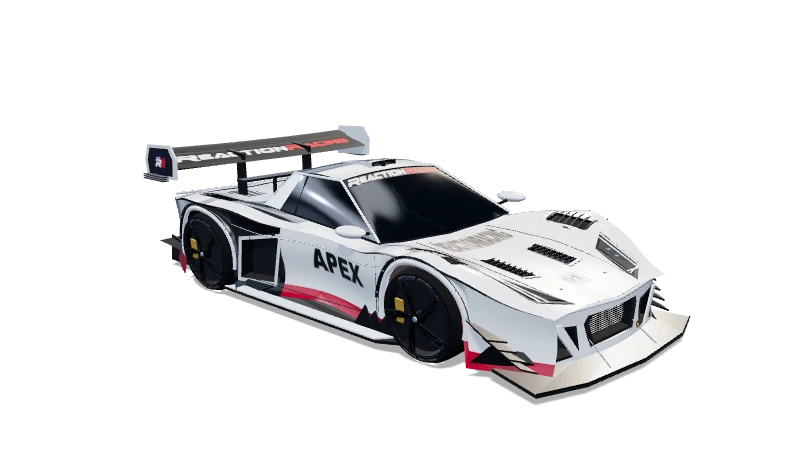
What would show that game practice transfers to independent tasks? Read the questions, comparison groups and measurement limits behind the research direction.
Getting better at ReactionRacing is a result worth measuring. It is not, by itself, evidence that playing improves an unrelated task. If a driver learns where to look, how to hold the device and how a slide behaves, game scores can improve through that learning alone. A transfer study has to ask an additional question: what changes outside the activity that was practised?
This article describes a proposed testing framework, not the results of a completed ReactionRacing trial. It does not announce a recruitment programme or a guaranteed benefit. The aim is to make the evidence we would need understandable before using broader claims about mental performance.
Define the claim before choosing the test
“Better reactions” is too vague to test well. Faster responses to the game's normal target, more accurate defence slides and better performance on an independent attention task are different outcomes. Decide which one matters, specify how it will be measured and state what size of change would be meaningful.
Near transfer means improvement on a related but distinct task. Far transfer makes a broader claim about performance in a substantially different setting. Evidence for the first does not automatically establish the second. In-game progress, an independent computerized measure and performance in a real-world activity need their own definitions and evidence.
Use a comparison group that also practises something
If one group plays a new game and another simply waits, differences can reflect engagement, expectations or the experience of taking tests. A stronger design uses an active comparison activity with similar time commitment and a credible reason to expect improvement. Random assignment helps prevent pre-existing motivation or skill from deciding who enters each group.
Neither group should be told that it is the one expected to improve most. Where feasible, the people administering or analysing the independent outcome should not know the participant's group. Those details make it harder for expectations to become an accidental explanation for the result.
Keep the outcome independent of the training
The primary transfer task should not be the same screen and movement the participant just rehearsed. Measure it before and after the practice period, using a protocol that handles ordinary retest effects. If the question is whether a benefit lasts, include a later follow-up rather than measuring only immediately after training.
Record accuracy as well as speed. A faster average achieved by making more errors may be a change in strategy, not a better ability to perform the task. Specify in advance how missing responses, extreme values and invalid trials will be handled. Changing those rules after seeing which version gives the nicest result makes the conclusion less trustworthy.
Control the input setup
A recorded response includes more than the participant. The display, input hardware, event timing and application can contribute to the observed duration. Use consistent equipment or explicitly account for those differences. Record software versions and the conditions under which a measurement was obtained.
ReactionRacing's normal turns, attacks and defence slides should also remain separate in analysis. Our September race sample had clean medians of 416, 517 and 483 ms respectively. That difference is expected to depend partly on the task: a slide duration is not equivalent to noticing a cue and making a single hit. Pooling them without explaining the mixture would obscure what changed.
What the last-ten-race sample can tell us
The published benchmark draws on ten finished races and six human drivers. It provides useful descriptive context for clean in-game actions. It is not randomized, the drivers contribute unequal numbers of observations, and it has no independent before-and-after outcome or comparison group.
Those limits mean it cannot establish a training effect or transfer. Excluding spins, crashes and capped durations is appropriate for describing uncapped clean-action speeds, but it also removes outcomes that matter to full race performance. A study claiming improvement would need to report those errors and exclusions, not quietly treat the remaining fast observations as the whole story.
Pre-register, report uncertainty, and share the result either way
A credible study would specify its primary outcome, sample-size reasoning, exclusion rules and analysis before collecting the relevant results. It would report the size and uncertainty of any difference, account for testing multiple outcomes and explain withdrawals or missing data. It would distinguish an exploratory finding from a pre-specified test.
An informative result may show improvement only in the game, a limited effect on a related task or no convincing difference from the comparison activity. Each is more useful than an impressive headline that cannot survive inspection. Independent replication would strengthen a claim that initially looked promising.
The existing evidence is a reason for precision
Simons and colleagues' 2016 review, Do “Brain-Training” Programs Work?, explains why gains on trained tasks and broad cognitive benefits must not be treated as the same finding. It is background evidence, not a ReactionRacing study or a claim to summarize every later publication.
For now, use Reaction Index feedback to understand your performance in the game. Enjoy practising specific skills and look for repeatable progress there. Broader claims should wait for the independent evidence that actually tests them.