
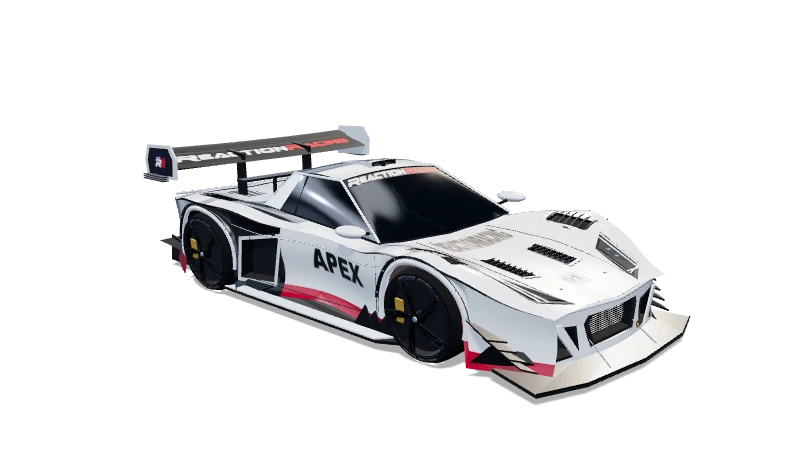
Explore reaction speed, attention and timing in racing games. Understand the Reaction Index and why in-game progress is not proof of broader cognitive benefits.
ReactionRacing is a free-to-play racing game built around reaction speed, attention, timing and decisions. Those are real demands of its gameplay. A different question is whether getting better at the game produces broader cognitive benefits. The two ideas should not be folded into one marketing claim.
This guide explains what we mean by mental skills in racing, what the Reaction Index can tell you, and what evidence would be needed to say more. You can enjoy practising the game without assuming it is a treatment, an intelligence test or a shortcut to better real-world driving.
What “mental skills” means here
On a normal turn, you wait through a light sequence, find an unpredictable target and respond accurately. In a battle, you read a changing visual situation and control a timed slide. Across a race, you need to repeat those actions while recovering from mistakes.
The Reaction Index describes six in-game domains: Reaction Speed, Attention Consistency, Decision Speed, Response Accuracy, Timing Control and Visual Awareness. These names describe aspects of game performance. They do not make the score a clinical assessment or a standardised measure of intelligence.
Three claims that need different evidence
- Better performance on a practised task. You become more accurate or faster at a ReactionRacing challenge you have played repeatedly.
- Transfer to a related task. You improve on a separate test that you did not practise, such as a differently designed choice-reaction task.
- Transfer to everyday activity. Improvement shows up in a meaningful setting outside the game, with different demands and consequences.
Evidence for the first claim does not automatically establish the second or third. Even a large rise in a game score might partly reflect familiarity with the controls, learning a strategy or becoming more comfortable with the device.
What the research literature cautions against
The review “Do ‘Brain-Training’ Programs Work?” by Simons and colleagues (2016) distinguishes improvement on trained tasks from evidence of broader transfer. It examines limitations in study design and in the claims made from training results. It is background research, not a study of ReactionRacing.
That distinction matters when reading any game’s claims. “Participants improved at the game” is much narrower than “the game improves general cognition.” A useful report names the task, the comparison group, the measurement and the limits instead of replacing them with a sweeping promise to boost your brain.
What a convincing evaluation would include
Independent tasks should be measured before and after a structured period of play. A suitable comparison group helps distinguish a training effect from familiarity with testing, expectations or simply spending time on an engaging activity. Consistent hardware helps reduce measurement noise.
The analysis should specify which outcomes matter in advance and report unfavourable results as well as favourable ones. A later follow-up can ask whether a measured difference persists. Real-world claims require appropriate real-world outcomes; a different screen-based reaction test cannot answer every driving or occupational question.
Our transfer-research article explains the evaluation questions in more detail. The research direction is a plan, not a published positive result, and the game should not be presented as independently proven cognitive training.
How to use your own progress responsibly
For personal practice, keep the claims modest and useful. “I made fewer misses in this mode on this device” is something your attempts can support. “My Reaction Index increased” describes an in-game trend. Neither statement establishes a medical benefit or a new real-world capability.
You can still use that feedback to choose a practice goal: more accurate target hits, fewer premature actions, cleaner defence slides or steadier performance over a session. The reaction-time routine and consistency guide show concrete ways to review those changes.
Play for the racing; measure what you can support
The immediate value of ReactionRacing is the experience of competing, mastering its challenges and building your car. The mental-skills angle explains how the racing works and what its feedback describes. Broader benefits remain a research question until appropriate evidence answers it.